What is Recruitment ROI, and how is it calculated- An Overview
Today’s modern recruitment is a completely different game compared to a few years ago. Employers now locate the most qualified employees using cutting-edge technology like automation and AI. When starting any recruiting drive, one of the most crucial things to address is, “How do we quantify our return on investment?” You need specific, quantifiable goals as well as reliable data to determine whether you are succeeding in fulfilling them if you want to make the recruitment programme the best it can be. Whether a recruitment campaign eventually succeeds or fails, the knowledge gained can make subsequent recruitment efforts rather more successful. What does recruitment ROI mean? How is recruitment ROI calculated? How is the success rate for hiring calculated? How do you evaluate the success of your hiring efforts? Trying to find a solution to these questions? Dive in.
What Is Recruitment ROI?
Recruitment ROI, often known as Human Capital ROI, is an HR metric used to measure the financial value your workforce produces about the money you spend on them in terms of salary and other benefits. ROI is the proportion of the delivered return on investment to the investment’s cost. You may better focus your time and resources on your most effective recruitment efforts by being aware of the recruitment ROI for the targeted recruitment strategies you use. Over time, Recruitment ROI enables you to significantly reduce hiring costs, hiring time, and other hiring-related expenses.
It is, simply put, the amount of money a business makes for each rupee it spends on employee compensation[1]. The Recruitment ROI displays the income generated about the overall employment costs. This remuneration covers the wages, benefits, and other payments made to full-time equivalent (FTE) and contingent (part-time or temporary) staff of any organisation. The recruitment ROI demonstrates the monetary worth that each person or group of employees has contributed. In short, it provides a clear picture of the productivity and efficiency of the human resource department.
How is Recruitment ROI Calculated?
To calculate recruitment ROI, the costs of hiring and implementing every employee are divided by their lifetime value. The following important variables should be taken into account when calculating the ROI of recruitment: offer acceptance rate, cost of hire, quality to hire, application completion rate, and time to hire. The result is expressed using a ratio or a percentage.
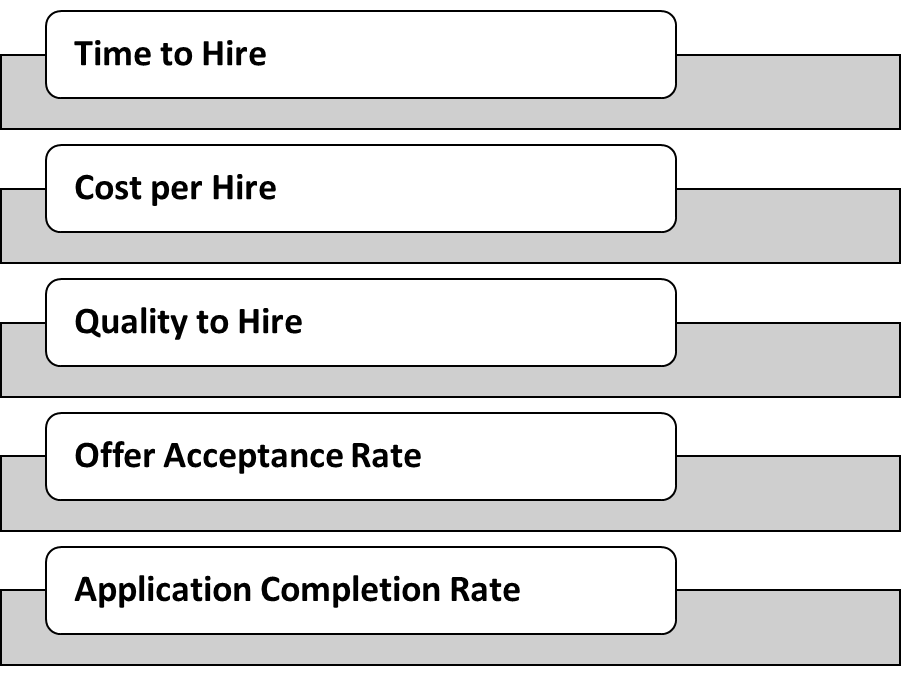
- Time to Hire: Time-to-hire is a crucial measurement metric for calculating the recruitment ROI. It measures the interval between when a company contacts a job applicant for the first time and when they respond and accept this same job offer. Despite the simplicity of the time-to-hire definition, the metric itself might reveal precise productivity ratios of the HR recruitment staff. A typical time-to-hire report can be generated by the majority of applicant tracking systems, or it can be divided into different occupations, offices, employing administrators, or other divisions. If your applicant tracking system (ATS) doesn’t provide this kind of utility, you can also calculate time-to-hire physically.
- Cost per Hire: Calculating the cost of each employee is the simplest approach to measure the recruiting ROI. What are the costs associated with the overall talent acquisition process? Is it possible to upgrade to a different tool that uses fewer resources without sacrificing performance? How much money do you spend on marketing for hiring? Monitoring your cost per hire gives you a chance to examine where you’re overspending, figure out how to do so, and find other places to put your money.
- Quality to Hire: This hiring metric is essential for determining whether or not the newly hired applicant is a good hire. You must evaluate the new employee’s worth to the team and its significant influence on the long-term performance of the business. This is arbitrary and fluctuates from business to business because performance and culture fit cannot be reduced to grades or statistics. The candidates’ reliability will increase if the source from which you are directly engaging is enhanced. Instead of relying solely on high-volume recruitment strategies that restrict your talent pool by providing you with a surplus of leads for unqualified applicants, save candidates who are a good match for the position. Examine your talent pool’s ratio of inactive to active employees as well, and try to improve them.
- Offer Acceptance Rate: The proportion of applicants who have accepted an official letter of employment from your business is measured by an offer acceptance rate or OAR. As a measurement of a recruiter’s competency, this measurement should be heavily relied upon. Before making an offer, the recruiter should be able to identify the candidate’s priorities, needs, and key concerns. Finding an offer that is ideal for both the candidate and the firm is no easy task. Contrarily, if the candidate doesn’t join the company after passing all of the interview stages, exams, and interactions, the hiring resources are wasted. As the OAR declines, the business’s operating expenses rise. Low OAR is detrimental to any business and is correlated with competent recruiters. Before making an offer, the recruiter’s ability to discover the candidate’s priorities, goals, and critical aspects is mirrored in the OAR.
- Application Completion Rate: This recruiting metric gives you the number of people who apply. Low application completion rates indicate that users abandon their applications before finishing them; this could be because the application is too long, too tedious, or asks about more personal information than users feel comfortable sharing. It might also indicate a technical problem of some kind. Quickly examine low application completion rates: Until you do, the hiring process as a whole is hampered. This KPI determines how many applicants begin, complete, and submit applications for a position that is open at a company. When combined with job board and online job search data, tracking ACR helps recruiters in optimizing their hiring procedures.
Conclusion
Because of the pandemic, we had to reconsider everything. In some respects, COVID assisted businesses in valuing the things that mattered by altering how employees dressed, redefining how we work, and dictating how we interact. Post-Covid, there are various futuristic working trends. Recruitment is not a secret company activity you participate in at no additional expense. It’s one of the few expenditures that matters. As a result, we advise correctly evaluating recruitment ROI if you want to optimize your hiring strategy. To learn more about interesting topics related to IT Recruitment services and staffing solutions, keep reading our blogs.
Read our Article: Recruitment Resolutions for 2023: Hiring Trends for the New Year